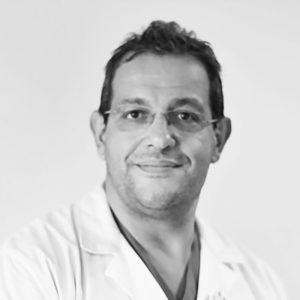
Prof. Giacomo Novara

Prof. Giacomo Novara

Associate Professor of Urology

Department of Surgical, Oncological and Gastroenterological Sciences (DiSCOG)

University of Padova

🤖 Robotic Surgery 🔬 Urological Oncology 🔭 Functional Urology 🎓 Academic Teaching
@giacomonovara LinkedIn

About me

I am Associate Professor of Urology at the University of Padova (www.unipd.it). The University of Padova is one of the oldest academic institutions in the world, with over 800 years of history.

My clinical activity is based at the Urology Unit of the Padova University Hospital (www.aopd.veneto.it). Over the past four years, this department has been consistently ranked by Newsweek magazine as one of the best urology units in Europe and the best urology department in Italy (rankings.newsweek.com).

Clinically, I specialise in the diagnosis, treatment, and follow-up of the main uro-oncological conditions, with a particular focus on prostate, bladder, kidney, upper urinary tract, testicular, and penile cancers. These procedures are now performed almost exclusively using robotic approaches, although I have extensive experience in laparoscopic surgery for renal and penile pathology, and open surgery for advanced bladder and renal cancers.

I also manage endoscopic and surgical treatments for patients with lower urinary tract symptoms secondary to benign prostatic hyperplasia or overactive bladder syndrome. In the reconstructive field, I perform robotic repair of female genitourinary prolapse, ureteropelvic junction obstruction, and ureteral strictures.

I have been teaching urology for over 10 years to undergraduate medical and nursing students at the University of Padova (including the Treviso campus) and to urology and surgical residents in various speciality training programmes.

In terms of research, I have published several hundred peer-reviewed articles in indexed international journals. My main areas of interest include urological oncology and functional urology, with a particular focus on prognostic factors in prostate, kidney, bladder, and upper tract urothelial carcinoma, outcomes of robotic surgery in oncological and functional urology, and robotic surgical training.

5,000+
Surgical procedures
600+
Scientific publications
↻ updated via OpenAlex
20+
Years of clinical activity
103
H-index
↻ updated via OpenAlex
10+
Years of academic teaching
36,000+
Total citations
↻ updated via OpenAlex
🎓
Education
  • 1994 — Classical secondary school diploma (60/60), Liceo Classico "Umberto I", Palermo
  • 2000 — MD degree with honours (110/110 cum laude), University of Palermo
  • 2000–05 — Urology Residency with honours (50/50 cum laude), University of Verona (2000–2005) and University of Padova (2005)
  • Fellow of the European Board of Urology (FEBU)
  • 2014 — Clinical Fellowship in Robotic Surgery, OLV Hospital (Onze-Lieve-Vrouwziekenhuis), Aalst, Belgium, under the supervision of Prof. Alexander Mottrie
💼
Career
  • 2008–14 — Researcher in Urology (MED/24), University of Padova
  • 2011–23 — Associate Editor, European Urology, official journal of the EAU (Impact Factor 2023: 25.3)
  • 2014 — Deputy Scientific Director, Vattikuti Robotic Surgery Institute, Melle, Belgium
  • 2014 → — Associate Professor of Urology (MED/24), University of Padova, with clinical activity at the Urology Unit of the Padova University Hospital
🎓
Teaching

Teaching of urology to undergraduate medical and nursing students at the University of Padova (Padova and Treviso campuses) and to residents enrolled in multiple postgraduate speciality training programmes at the University of Padova.

🌍
International collaborations

Key international institutions I have collaborated with:

  • 🇺🇸 Weill Cornell Medicine, New York
  • 🇮🇹 Università Vita-Salute San Raffaele, Milan
  • 🇺🇸 UT Southwestern Medical Center
  • 🇨🇦 University of Montreal
  • 🇩🇪 Klinikum der Universität München
  • 🇩🇪 Ludwig-Maximilians-Universität München
  • 🇩🇪 Universität Regensburg
  • 🇧🇪 OLV Vattikuti Robotic Surgery Institute, Aalst
  • 🇩🇪 Universitätsklinikum Hamburg-Eppendorf
  • 🇨🇦 McGill University Health Centre
  • 🇦🇹 Medical University of Vienna
  • 🇺🇸 University of Southern California, Los Angeles
  • 🇦🇹 Medical University of Graz
  • 🇺🇸 MD Anderson Cancer Center, Houston
  • 🇺🇸 Memorial Sloan Kettering Cancer Center, New York
  • 🇪🇸 Universidad Autónoma de Madrid
  • 🇫🇷 Université Paris Cité
  • 🇯🇵 Kitasato University School of Medicine
  • 🇫🇷 AP-HP Assistance Publique – Hôpitaux de Paris
  • 🇺🇸 Baylor College of Medicine
  • 🇺🇸 Penn State Health Milton S. Hershey Medical Center
  • 🇫🇷 Sorbonne Université, Paris
  • 🇺🇸 Henry Ford Hospital, Detroit
  • 🇫🇷 Hôpital Universitaire Pitié Salpêtrière, Paris
  • 🇺🇸 City of Hope National Medical Center
  • 🇺🇸 The University of Texas at Dallas
  • 🇳🇱 The Netherlands Cancer Institute, Amsterdam
  • 🇩🇪 Universität Heidelberg
  • 🇬🇧 The University of Sheffield
  • 🇨🇦 McGill University, Montreal
  • 🇬🇧 King's College London
  • 🇺🇸 University of Michigan, Ann Arbor
  • 🇺🇸 Johns Hopkins University, Baltimore
  • 🇺🇸 UT Health Science Center, San Antonio
  • 🇦🇺 Peter MacCallum Cancer Centre, Melbourne
  • 🇩🇪 Universität Bonn
  • 🇪🇸 Fundació Puigvert, Barcelona
  • 🇺🇸 Mayo Clinic, Rochester
  • 🇺🇸 Cleveland Clinic Foundation
  • 🇬🇧 University College London
  • 🇨🇭 University Hospital Basel
  • 🇫🇷 Université de Rennes
  • 🇺🇸 Harvard Medical School, Boston
  • 🇬🇧 Guy's Hospital, London
🏆
Awards and honours
  • 2008Awarded Reviewer of the Month by European Urology (July 2008).
  • 2010Awarded Reviewer of the Year by European Urology.
  • 2010European Urology Best Scientific Paper Prize — V. Ficarra, G. Novara et al. «Preoperative Aspects and Dimensions Used for an Anatomical (PADUA) Classification of Renal Tumours in Patients who are Candidates for Nephron-Sparing Surgery». European Urology 2009;56:786–793.
  • 2011Best Abstract, EAU Annual Meeting – Poster session 42 «RCC: diagnosis and prognosis». G. Novara: «Head to head comparison of the most relevant integrated prognostic systems predicting cancer-specific survival in clear cell renal cell carcinoma».
  • 2011Best Abstract, EAU Annual Meeting – Poster session 51 «RCC: nephron-sparing surgery». G. Novara: «Partial and radical nephrectomy for pT1 renal cell carcinoma: results of the Saturn project».
  • 2013European Urology Prize for the Best Paper on Clinical Research — S. Shariat, M. Rink, G. Novara et al. «Pathologic Nodal Staging Score for Bladder Cancer: A Decision Tool for Adjuvant Therapy After Radical Cystectomy». European Urology 2012.
  • 2013European Urology Prize for the Best Scientific Paper by a Young Urologist (≤35 years) — M. Rink, G. Novara et al. «Stage-Specific Impact of Tumor Location on Oncologic Outcomes in Patients With Upper and Lower Tract Urothelial Carcinoma Following Radical Surgery». European Urology 2012;62(4):677–684.
  • 2015Winner of the Italian Matula Award at the Annual Congress of the Italian Society of Urology (SIU).
  • 2017Best Poster, EAU Annual Meeting – Session 79 «Challenges in minimally invasive partial nephrectomy». F. Zattoni, R.H. Thompson, G. Novara et al.: «Partial nephrectomy in the treatment of renal tumors with concomitant venous tumor thrombosis of renal vein branches».

Robotic surgery in urology

Robotic surgery represents one of the most significant advances in modern medicine. In urology, this technology has transformed the management of many conditions, offering patients more precise, less invasive procedures with significantly shorter recovery times.

The most widely used robotic platform worldwide is the Da Vinci system, which allows the surgeon to operate through small incisions — just a few millimetres — with high-definition three-dimensional vision and wristed instruments capable of movements beyond the range of the human hand. The surgeon guides the robot in real time from a dedicated console, maintaining complete control of the procedure at every moment.

How the robotic system works

The system consists of three main components:

The surgeon never loses control of the procedure: every movement of the robotic arms is a direct, precise translation of the surgeon's hand movements. The system automatically filters involuntary tremors and amplifies surgical dexterity.

Main applications in urology

🟣
Prostate cancer

Robot-assisted radical prostatectomy allows removal of the prostate with maximum precision, preserving the neurovascular bundles responsible for erectile function and the continence mechanism, with reduced blood loss and faster recovery compared to open surgery.

🫘
Kidney cancer

Robot-assisted partial nephrectomy allows resection of only the tumour-bearing portion of the kidney, preserving healthy parenchyma, with shorter warm ischaemia times and better long-term renal function compared to conventional laparoscopy.

🔵
Bladder cancer

Robot-assisted radical cystectomy allows removal of the bladder with reduced blood loss, fewer transfusion requirements, and shorter hospital stay. In high-volume centres, intracorporeal neobladder reconstruction is also feasible.

🩺
Functional and reconstructive conditions

The robotic approach is also used for ureteropelvic junction obstruction (pyeloplasty), female genitourinary prolapse repair, and complex ureteral strictures, with excellent outcomes and rapid recovery.

Patient benefits

Compared to conventional open surgery, robotic surgery offers numerous advantages documented in the international scientific literature:

🩸

Reduced blood lossLower risk of intraoperative transfusion.

🔪

Minimal incisionsLess postoperative pain and improved cosmesis.

🏠

Shorter hospital stayFaster return to normal daily activities.

🛡️

Lower infection riskReduced wound complications.

🎯

Greater precisionBetter preservation of neurovascular structures.

Better functional outcomesFaster recovery of urinary continence and erectile function after prostatectomy.

🏆

Equivalent or superior oncological outcomesReduced positive surgical margins compared to open surgery.

What to expect: the patient pathway

Before surgery, each patient undergoes a thorough assessment to establish whether robotic surgery is the most appropriate approach for their specific clinical situation. Not all conditions and not all patients are ideal candidates: the treatment decision is always discussed with the patient, taking into account the disease characteristics, general health status, and individual expectations.

After surgery, most patients are able to mobilise and eat within the first few hours, with a median hospital stay ranging from 1 to 4 days depending on the procedure. Postoperative follow-up is planned with regular appointments to monitor both oncological outcomes and functional recovery.


Urological Oncology

Patient information on the main urological cancers


Non-oncological Conditions

Patient information on the main non-oncological urological conditions


Scientific Publications

Updated in real time from PubMed — Novara Giacomo

⏳ Loading...
Retrieving publications from PubMed...

Contacts

For clinical enquiries, research collaborations, or academic matters

📞
Secretary +39 049 821 1250
🏥
Clinical address

Urology Unit, Padova University Hospital
Via Giustiniani 2, 35128 Padova, Italy

www.aopd.veneto.it →
🎓
Academic address

DiSCOG — University of Padova
Via Giustiniani 2, 35128 Padova, Italy

X (Twitter) @giacomonovara →

⚠️ The information on this website is intended for educational and informational purposes only. It does not replace the advice of a specialist physician. For personal clinical matters, please consult your general practitioner or a urologist.